Fine motor skills at 2, 3 and 4: a parent’s milestone guide
Before a 4-year-old can write, they need to be able to hold. Fine motor skills — the small muscles in the hand, the pincer grip, the steady wrist — are what make writing, drawing, buttoning and eating possible. Here’s what to expect at each age, and the simple home activities that build each stage.
Age 2: grasping, releasing, pointing
What to expect: Stacking 3–5 blocks. Turning the pages of a board book (often two at a time). Scribbling with a fist-grip crayon. Feeding themselves with a spoon — not tidily.
Home activities:
- Stickers — peeling and placing
- Playdough — squeezing, rolling, poking
- Stacking cups, large lego
- Dropping pebbles into a bottle
Age 3: the pincer takes shape
What to expect: Holding a crayon with thumb and first two fingers. Cutting along a straight line with toddler scissors. Drawing a recognisable circle. Eating with a spoon with less mess. Buttoning large buttons.
Home activities:
- Tearing paper — great for pincer strength
- Threading large beads on a shoelace
- Finger-painting
- Spooning rice from one bowl to another
Age 4: coordination and precision
What to expect: Drawing a person (head, eyes, two arms, two legs). Copying shapes. Using kid scissors fluently. Writing their first name in rough letters. Eating independently, using a fork.
Home activities:
- Lacing cards
- Building with smaller lego pieces
- Pouring from a small jug
- Helping chop soft vegetables with a kid-safe knife
Age 5–6: ready-to-write
What to expect: Proper tripod pencil grip. Writing letters and numbers. Tying shoelaces (some children). Drawing with detail. Using a fork and spoon together.
When to gently worry
Fine motor development varies widely. But if by age 4 your child:
- Still holds a crayon in a fist
- Cannot stack more than 4 blocks
- Refuses to pick up small objects
- Tires very quickly from any hand activity
…it’s worth a conversation with your paediatrician or a paediatric occupational therapist. This is NOT a medical diagnosis; it’s just a flag to get a proper professional eye on it.
Fine motor skills aren’t built on a worksheet. They’re built on a thousand small moments with sand, water, playdough and cut fruit.
What we do at preschool
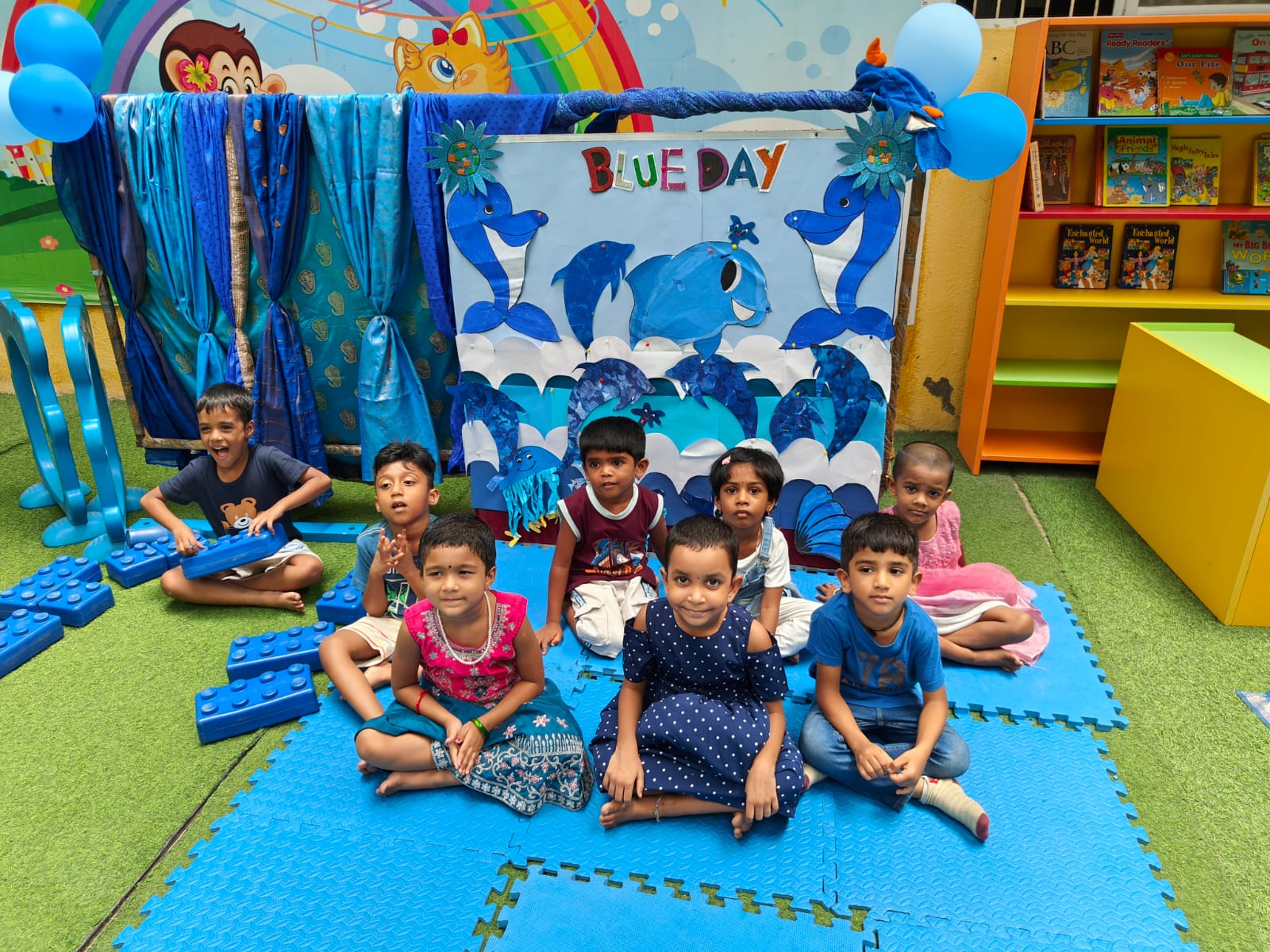
Every day in our classrooms includes at least two fine-motor-focused play stations — art, playdough, beads, water play, or tool use. Children progress through them at their own pace. By Upper KG most children have the tripod grip and steady wrist needed for Class 1.
Read also: the school-readiness checklist and why play-based learning beats worksheets.
See the fine-motor stations at iPlay iLearn
Our classrooms are built around hands — not worksheets. Come see how.
Book a classroom visit →