Play-based learning vs worksheets: what the research actually says
Every parent has seen the WhatsApp forward: a 3-year-old from another preschool writing “A B C D” in neat lines. It’s a performance, and it looks impressive. But research in early childhood is remarkably clear about which approach helps children in the long run — and it isn’t the worksheet.
The 30-year research picture
The longest study on this is the High/Scope Perry Preschool project, which followed children into their 40s. Children in a play-based preschool programme outperformed children in a more academic, direct-instruction programme on nearly every measure by age 23 — more stable employment, more education completed, fewer arrests. The direct-instruction group initially looked ahead at age 5. The gap disappeared by age 7 and reversed thereafter.
This is not an isolated finding. Subsequent research in the US, UK, Finland and New Zealand has all converged on the same conclusion.
Why it looks like worksheets are working
A 4-year-old who fills a worksheet is demonstrating a skill. It feels concrete. The parent sees output. The school reports “completed 20 pages this week.” This is satisfying and measurable — but it is not learning. It is repetition of a shape the child has not necessarily understood the meaning of.
Why play actually teaches more
When a 4-year-old runs a pretend grocery shop:
- They count out tokens (maths).
- They label items with pretend prices (early writing).
- They negotiate with a customer (social skills).
- They sort products by category (classification).
- They tell a customer a story about the mango (narrative).
Five domains of learning, self-initiated, retained for years. No worksheet in the world does that.
Play is not what children do instead of learning. Play is how children learn.
“But will my child fall behind for big school?”
This is the real fear. The short answer: no. Children from play-based preschools catch up on reading and writing within three months of starting Class 1. They then pull ahead on comprehension, reasoning and problem-solving for the rest of their school life.
What play-based doesn’t mean
Play-based is not “free play all day”. Skilled teachers shape play with intent — pre-planning materials, asking good questions, pulling children into language-rich interactions. Our I EPICS framework is exactly this kind of structured play.
How to spot the difference on a school visit
- Watch children. Are they moving, talking, building — or sitting silent in rows?
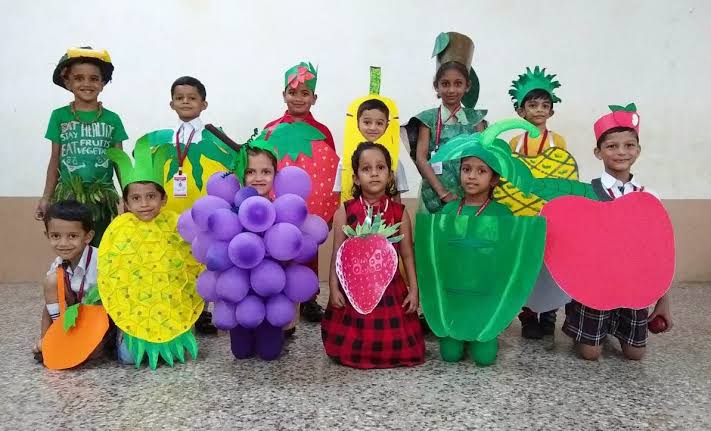
- Look at the walls. Is there child-made art, or only printed charts?
- Listen to teachers. Do they ask questions, or give instructions?
Visit a play-based classroom
Come and see what learning through play actually looks like for a 3-year-old in Medavakkam.
Book a classroom visit →